
Forestry Mulching & Land Clearing in Mexico, MO
Flat prairie farm ground. Out here the trees mostly live in the fence rows and along the creeks.
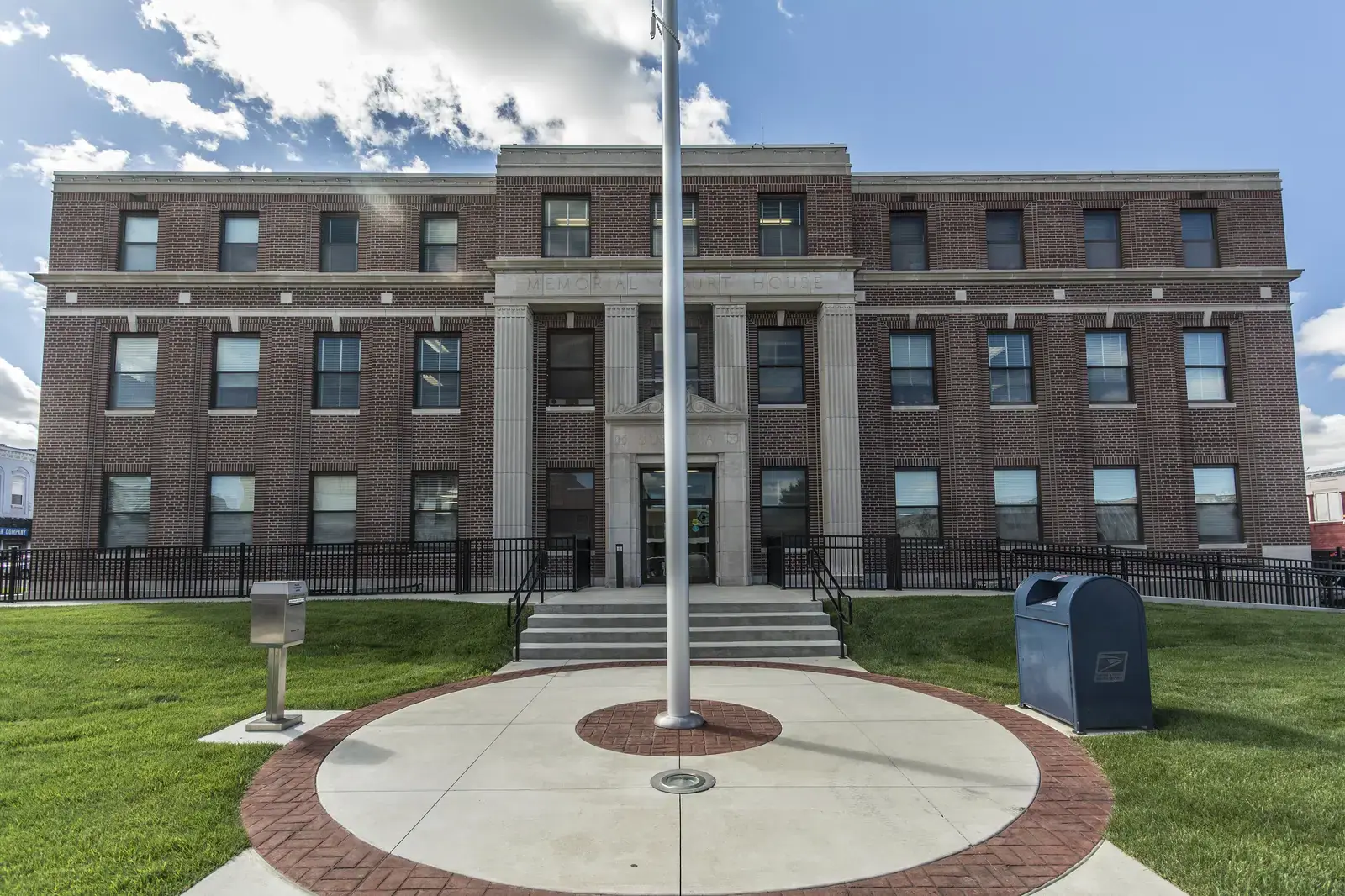
Land clearing in Mexico, MO covers the open Audrain County prairie along Highways 54, 22 and 15, the hedge rows between fields, and the wooded creeks that feed the forks of the Salt River.
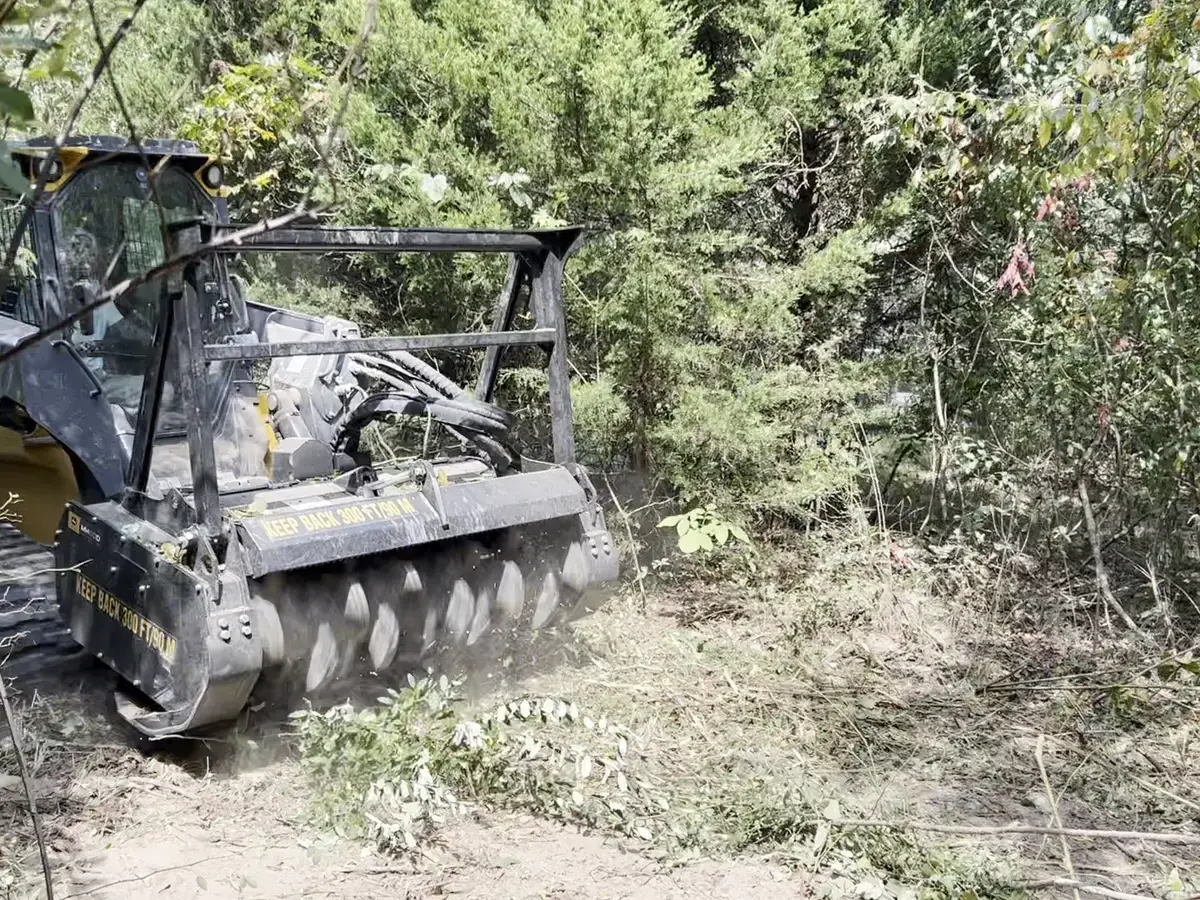
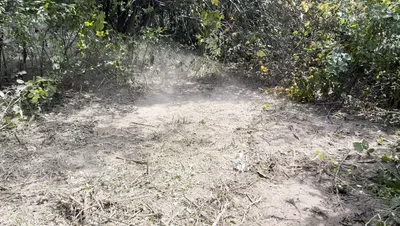
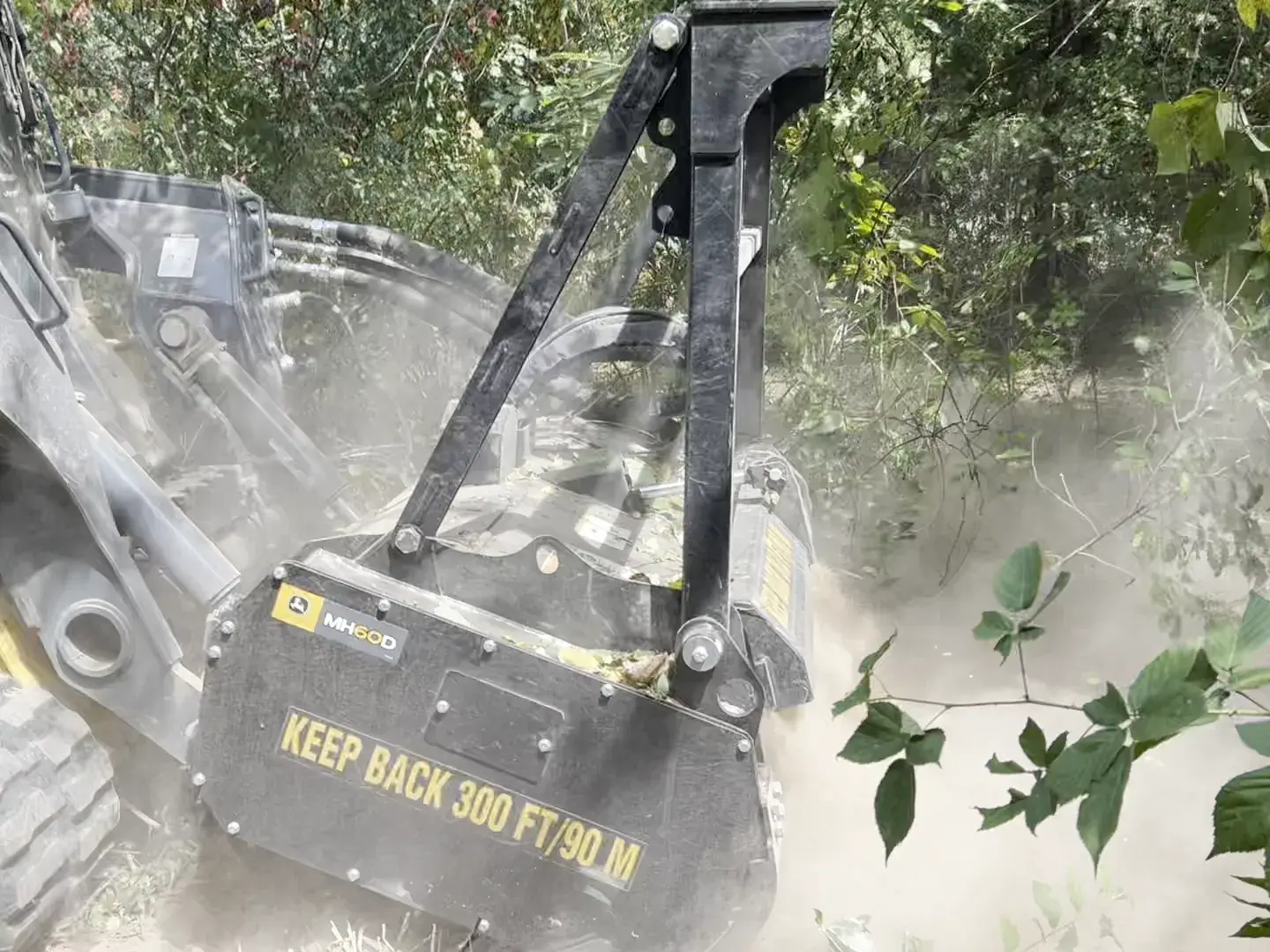
Forestry mulching around Mexico, Missouri clears the hedge rows and creek-bank brush that creep into the edges of Audrain County's flat farm fields. A forestry mulcher grinds the growth into chips right where it stands. You end up with no burn pile and nothing to haul off the farm, and the stems are ground down low enough that the strip can be farmed or fenced again.
Mexico: open prairie with grown-up edges
Audrain County is about as flat and open as it gets in this part of Missouri. Most of it was prairie before it was plowed. So the trees here mostly grow where somebody let them, which usually means fence rows, old house sites and creek banks. Mexico is the county seat. People around here know it for saddle horses and the old fire brick plants. It is newer ground for us. The drive from our shop in Salisbury is a little over an hour east, so when we come over we try to line up a full day of work.
Farmers know the soil around Mexico by name. There is a claypan soil called Mexico silt loam, named for the town. A tight layer of clay sits a short way down. In a wet spell the water stays on top, and in a dry summer the ground bakes hard. For us that comes down to timing. A tracked machine does fine on dry claypan. On a soaked spring field we would rather wait a week than leave ruts you have to farm around all year.
Hedge rows are the big job here. Settlers on this prairie had no timber for rails, so they planted osage orange as a living fence. A lot of those rows are still standing. Some have spread thirty feet wide by now. They shade the crop and swallow the wire. Hedge is hard, heavy wood, and the thorns go through gloves. The mulching head grinds it where it stands, which beats dragging thorny limbs across a field by hand.
Cedar comes in second. On ground this open it starts on the waterways, terrace backs and pasture corners that skip a year of mowing. One tree becomes a patch, and the patch keeps going. Cedar is honestly the easy part of a hedge row job. Grind it out and grass can get back into the waterway before the next hard rain moves soil.
Mexico is row-crop country, and on a farm like that the edges add up. A brushy strip along a field may not look like much from the road. Up close it means extra turns with the planter and the sprayer, and the crop yields less along the shade line. Taking that edge back to the fence gives the field its full width again. On flat ground like this, the strip under the brush is often just as good as the rest of the field.
Fence lines along 54, 22 and 15
Highway 54 cuts through Mexico on a diagonal, from Fulton to the southwest up to Vandalia and on toward the Mississippi. Highway 22 goes west to Centralia. Highway 15 heads north toward Paris. Drive any of them and you see big fields, long fence lines and the odd strip of timber. That is where the work is. It sits along field edges instead of back in deep woods, so getting the machine to it is usually simple.
Laddonia, Vandalia, Martinsburg and Thompson are all out in that open ground. The calls from those farms sound a lot alike. Somebody has a hedge row splitting two fields that ought to be one. Or a pasture edge where cedar got started, or a farmstead windbreak that has gone wild. These are long, straight runs. A tracked mulcher walks down them steadily and nothing gets piled in the field.
Thorns, locust and the Salt River creeks
Most of what grows on the fence rows is osage orange and cedar, with honey locust and multiflora rose mixed in. Locust thorns will flatten a tractor tire. Rose grows into a mound you cannot get through without a machete. It all grinds down to chips. Hedge, locust and rose do come back from the roots, though. If you want the row to stay clean, plan to spray the new sprouts once they leaf out.
Down along the creeks headed for the Salt River the trees get bigger and the ground gets wetter. You will find silver maple, box elder and cottonwood there, plus willow, elm and some ash. Those banks fill back in fast after a wet year. Clearing brush off the edge of a creek field takes the shade off the crop. The mulch left on the bank also gives it some cover for the next big rain.
Joining fields, horse pasture and deer lanes
Fence rows are what we get called about most on Audrain County farms. Some owners want the fence gone so two fields can be worked as one. Others just want the brush off it so a new fence can go up on the same line. The mulcher grinds the trees and brush to chips either way. What is left is a low, clean strip a tractor or a fence crew can get to work on.
Not every call is about crops. There are horse farms around Mexico, and cattle pastures, and country homes on a few acres. Those owners might want an old pasture opened up or a cedar patch cleared behind the barn. Sometimes it is just a lane cut back to the far corner. Hunters call too. In a county this open, the creek timber is about the only cover the deer have, and that is where they want their trails.
Services in Mexico
Forestry Mulching
Standing brush, saplings and undergrowth ground down into mulch where they stand. No burn piles, nothing hauled off.
Building Site Clearing
House pads, shop sites, barn sites and access lanes cleared and opened up so your builder or excavator can start on schedule.
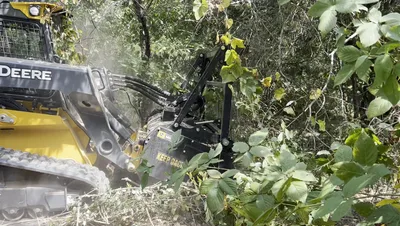
Brush Clearing
Fence lines, field edges, ditch banks and pasture reclaimed from honeysuckle, cedar, multiflora rose and volunteer brush.
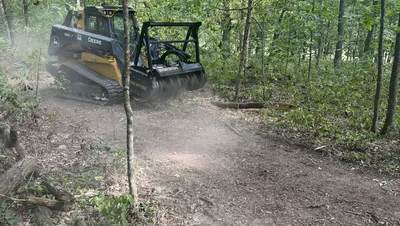
Trail Clearing
Shooting lanes, ATV and UTV trails, walking paths and access lanes cut through timber at the width you want.
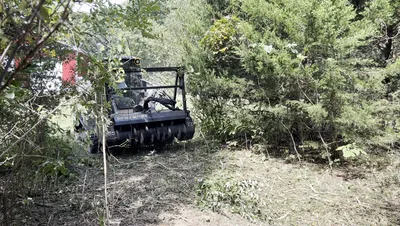
Fire Breaks
Fire breaks mulched around structures, timber stands and property lines ahead of prescribed burns or fire season.
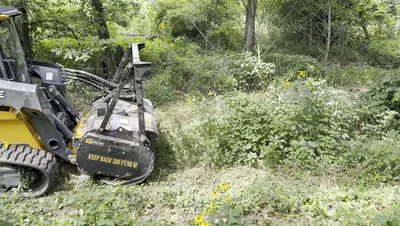
Small Tree Pulling
Small trees and cedars pulled root ball and all where a stump left behind would be a problem later.
General Land Clean Up
Storm debris, dead falls, old brush piles and the leftovers of a logging job cleaned up and the ground put back in order.
Communities We Serve in Audrain County
Need Help in Mexico?
Free on-site estimates for all Audrain County properties. One crew, one machine, done.
Mexico FAQ
Common questions from property owners in Mexico, Missouri.
We are in Salisbury, a little over an hour west of Mexico. The drive gets figured into the quote. That is why Audrain County jobs work best when there is a good day of work lined up. Got several fence rows, or a neighbor who needs clearing too? Tell us, and we can do them on the same trip.
Yes. Osage orange is about the hardest wood in Missouri and it is covered in thorns, but the mulching head grinds it down where it stands. Nobody has to cut it, drag it or burn it. Hedge will sprout again from the stump. Hit the sprouts with herbicide afterward if you want the row to stay gone.
The mulcher grinds the stems down low, near the dirt. If a small tree sits right where the planter will run, we can pull it out roots and all. At the estimate we ask what the strip is going to be used for. Crop ground, pasture and a new fence line each get cleared a little differently.
Sometimes. The machine runs on tracks and is easy on the ground. Wet claypan is soft, though, and it holds water close to the top. If your field is soaked, we would rather pick a new date than tear it up. In Audrain County, late summer and fall are often the best times to clear fence rows. Frozen winter ground works well too.
We clear the trees and brush off the row. Getting the old wire and posts out is a separate job, and you may want it done first. Old fence wire wraps up in a mulching head and makes a mess. Once the wire is gone, the mulcher can grind the row down and the two fields can be farmed as one.
Yes, on the bank and the field edge. We stay out of the creek channel itself, since working in it can take a permit. Taking the bank brush off gets the shade off your crop. The mulch it leaves helps hold the dirt in place. At the free estimate, we can talk about how much of the bank you want to keep.
Nearby Service Areas
Last updated
Clear Your Mexico Property
Mid Missouri Forestry Mulching serves Mexico, Missouri and all of Audrain County. Free estimates.
Serving Boone County and mid-Missouri · Estimates by appointment — call or text