Trail & Shooting Lane Clearing in Mid-Missouri
Trails, shooting lanes and access routes cut to the width and route you flag — quiet, low-impact access into the back of a property.
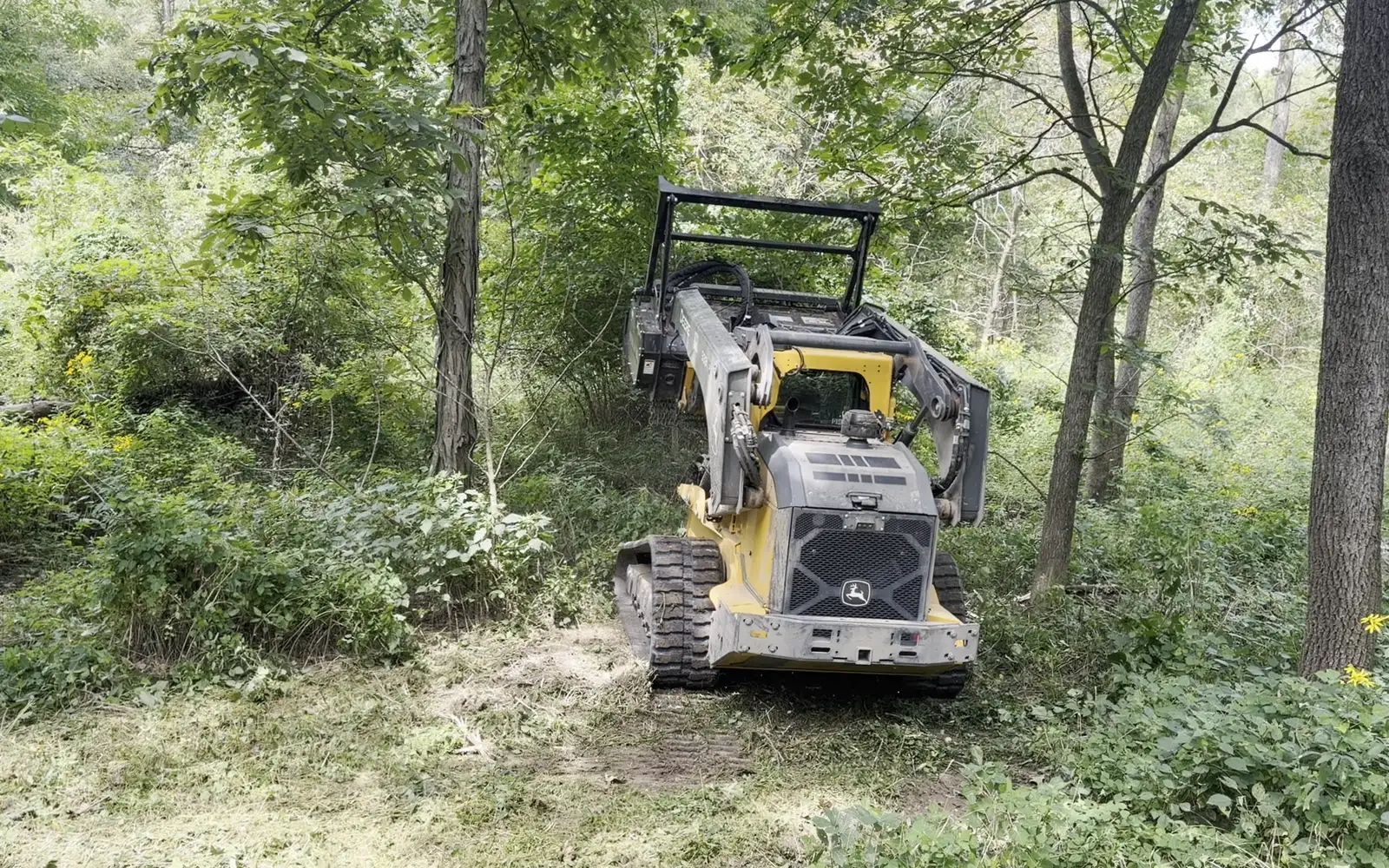
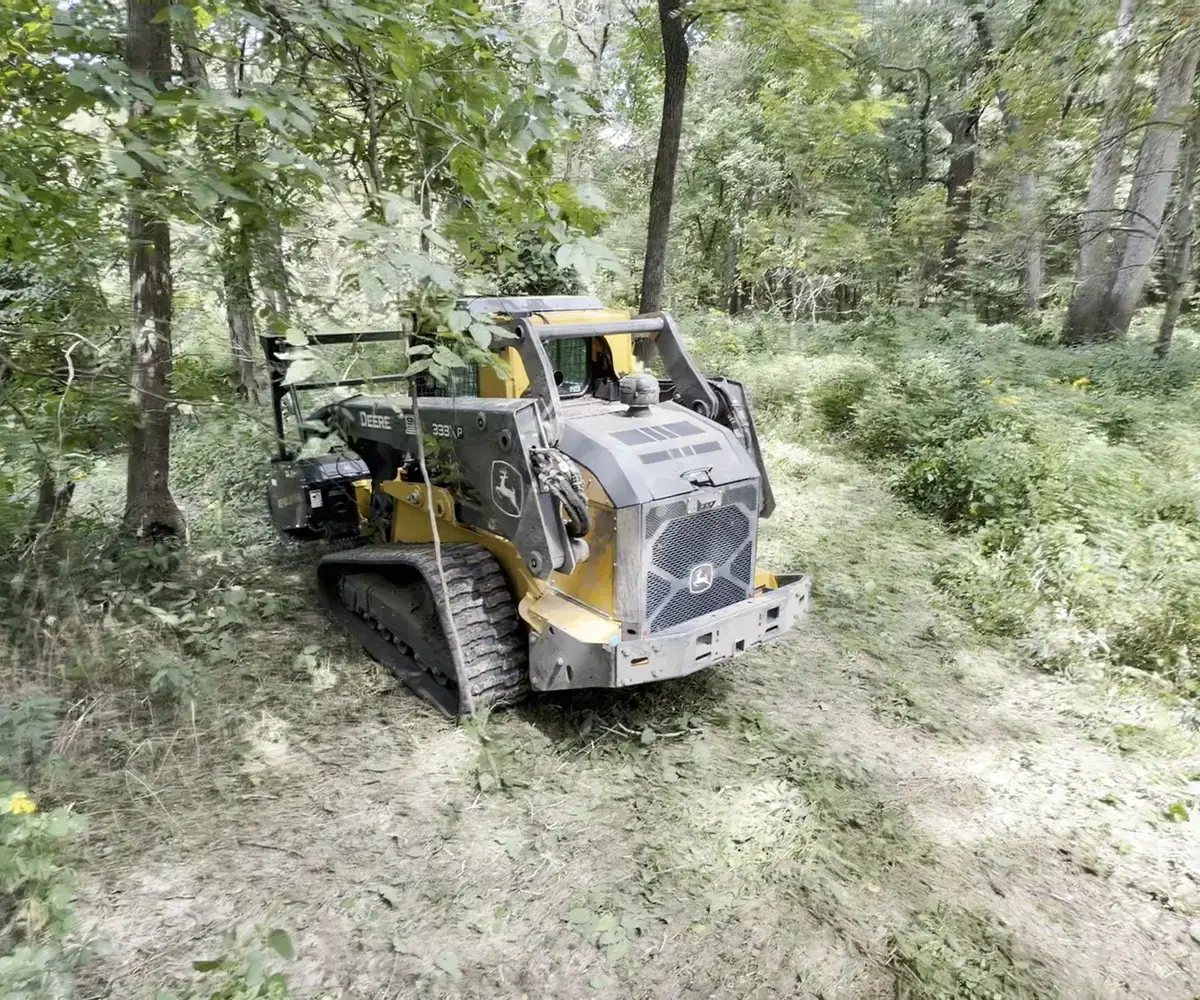
Trail clearing is the cutting of access routes and shooting lanes through timber, with the removed material mulched into the trail surface rather than pushed into windrows along the edges.
Trail clearing cuts access routes, ATV and UTV trails, walking paths and shooting lanes through standing timber and brush. Mulching the material leaves a firm, walkable surface rather than the rutted cut a dozer produces, and the route follows whatever line you flag.
What Trail Clearing Gets You
Most recreational ground has more usable acreage than it has access. The back forty is only worth what you can reach, and a property you cannot get into quietly in the dark is a property you hunt half of. Trail clearing puts routes where you want them, at the width you need, without the scar a dozer leaves.
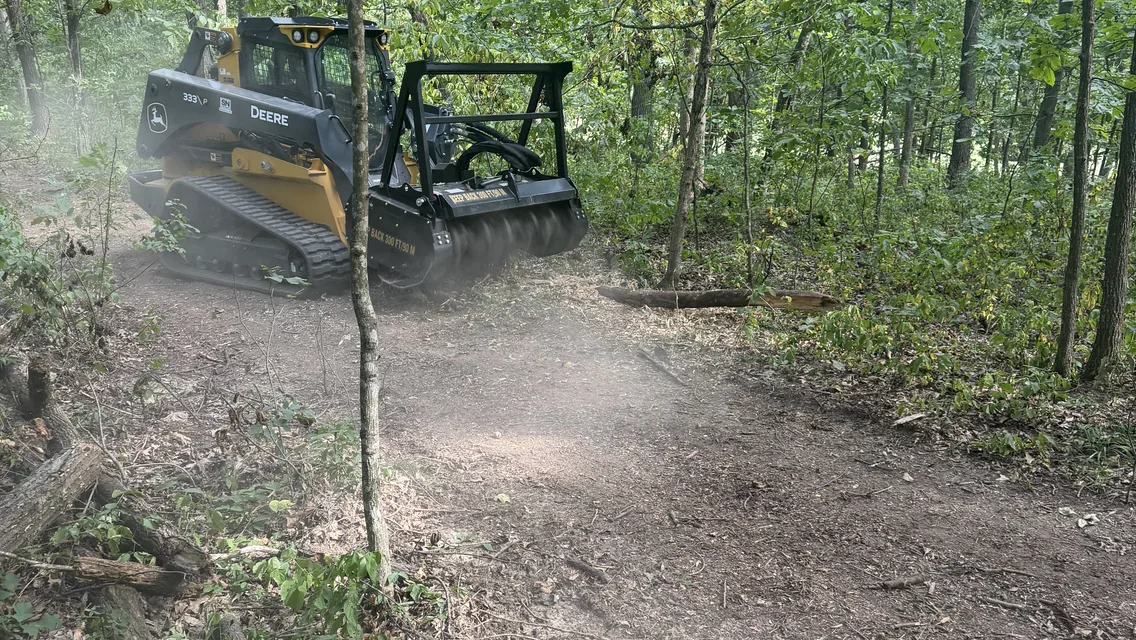
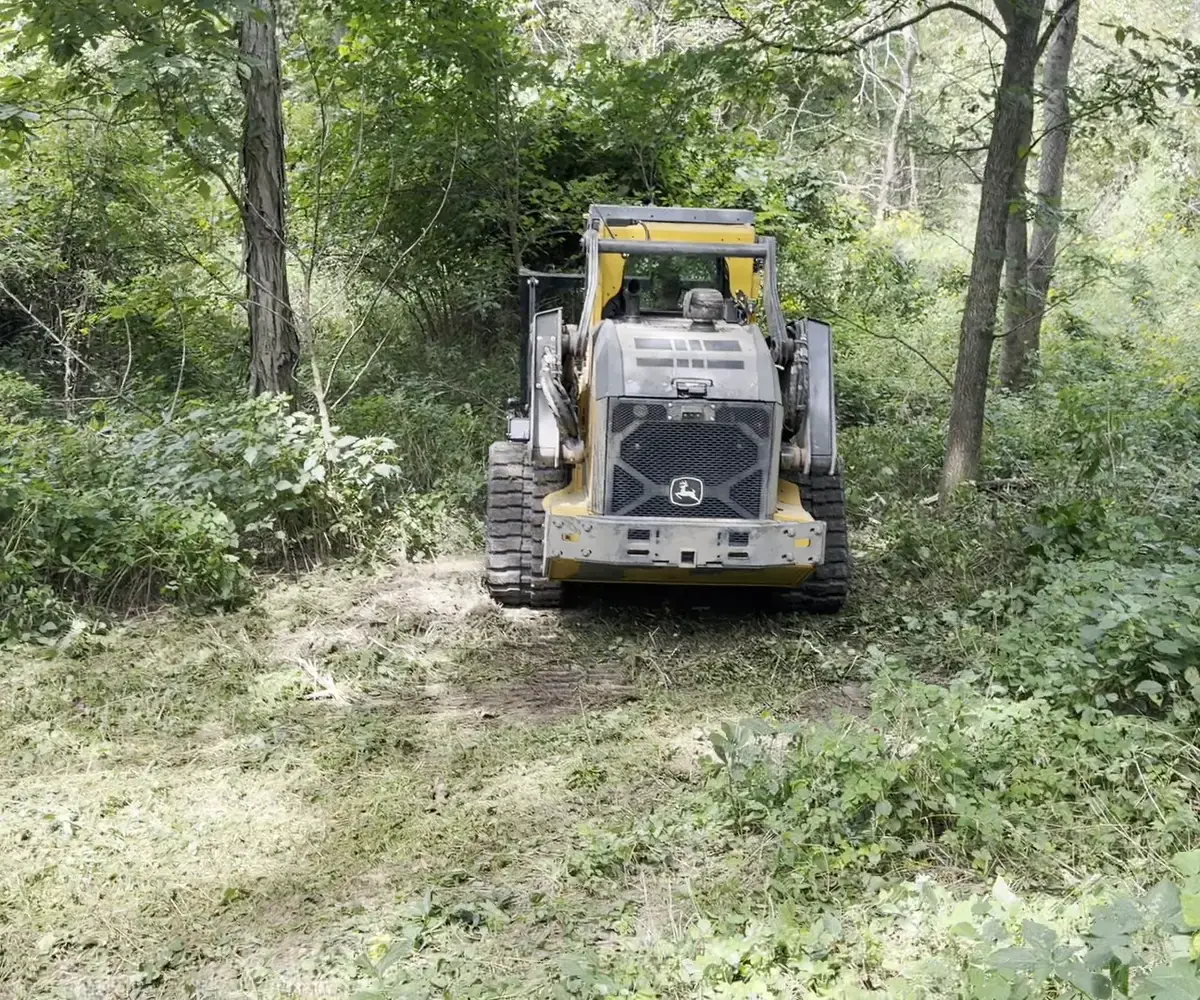
The surface is the difference. A dozer-cut trail pushes topsoil and material into berms along the edges and leaves exposed dirt in the middle, which on any grade turns into a rut after two seasons. A mulched trail leaves the material as a layer on the trail itself. It walks better, it rides better, and it holds up on the slopes and draws that make up most mid-Missouri timber ground.
Route matters as much as width. Flag the line you actually want — following a contour instead of running straight up a draw, staying downwind of a bedding area, keeping a rise between the trail and where you expect deer to be. The machine follows the flags. This is the part that gets lost when a trail is cut to a straight line on a map.
Shooting lanes are the same operation with a different objective. Rather than access, you are opening sight lines from a stand or blind to the ground you want to cover, at a width and length that suits how you hunt. Cut in late winter and the edges have a full growing season to green up and soften before fall.
Timing is worth planning around. Late fall through early spring means leaves are down, the operator can see the standing timber clearly, and the ground is firm enough to work without rutting. It also means the work is finished and settled well ahead of the season.
Common Uses for Trail Clearing
- ✓ATV and UTV trails through timber
- ✓Walking and access trails to stands and blinds
- ✓Shooting lanes from an existing stand
- ✓Access lanes to food plots and back acreage
- ✓Interior property lines opened for walking
- ✓Fire-lane and utility access routes
Why Choose Trail Clearing
A Surface That Holds
Mulched material stays on the trail as a layer rather than being pushed into berms, so the route holds up on grade instead of rutting out.
Your Route, Not a Straight Line
Flag the line and the machine follows it — around contours, downwind of bedding, behind a rise.
Quiet Access
A mulched trail walks quietly, which is most of the point of having it on hunting ground.
Cut Ahead of Season
Work done in late winter has a full growing season to green up and soften at the edges before fall.
Our Trail Clearing Process
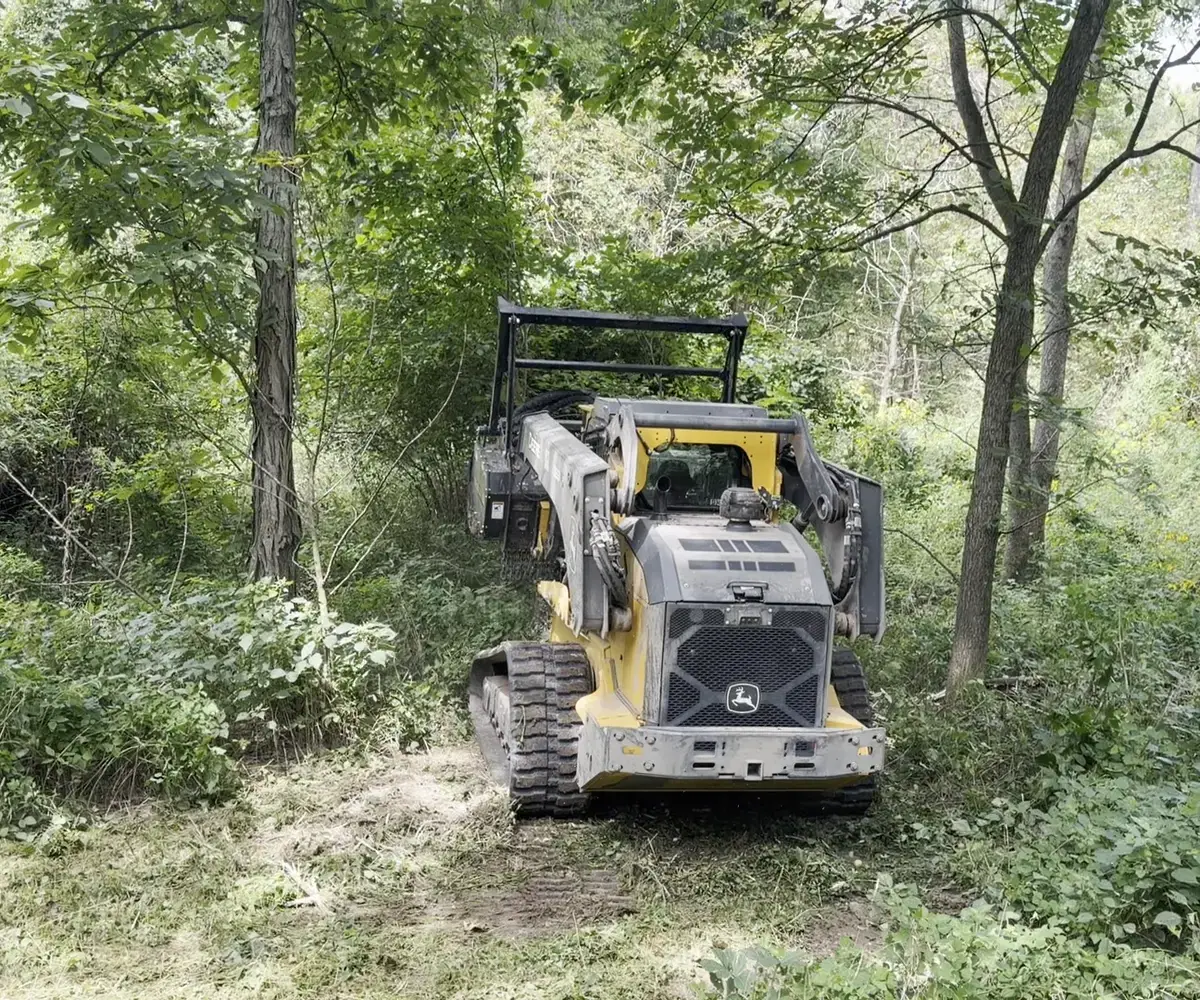
You flag the route, or we walk it together and lay it out on the ground.
We agree on trail width and on which standing timber stays.
You get an estimate before anything is cut.
The route is cut and the material mulched into the trail surface.
Typical cost:
Exact pricing depends on your property. We provide free on-site estimates.
Trail Clearing FAQ
Common questions about trail clearing in Boone County and mid-Missouri.
It depends what is using it. A walking trail to a stand can be narrow; a UTV route wants enough width to pass comfortably with room at the corners; an access lane for equipment wants more again. Deciding this on the ground rather than on a map is worth the walk-through.
Yes — that is the preferred way to do it. You know the property, where the deer move on it and where you want to be able to get to quietly. Flag it and the machine follows the flags.
Late winter and early spring is the usual window. The ground is firm, the leaves are down so the operator can see the timber, and the cut edges have a full growing season to soften before fall.
Some. Brush and briar come back at the edges, faster in the first couple of seasons after cutting. Keeping a trail open is far quicker than opening it the first time.
Related Services
What Customers Say on Google
Last updated
Ready for Trail Clearing?
Get a free, no-obligation estimate for your trail clearing project.
Serving Boone County and mid-Missouri · Estimates by appointment — call or text